
At the Table with the Winemaker
Christos Boskos | Vegoritis Winery
Drunky Goat ΣΤΟΑ
The Stories Behind the Labels
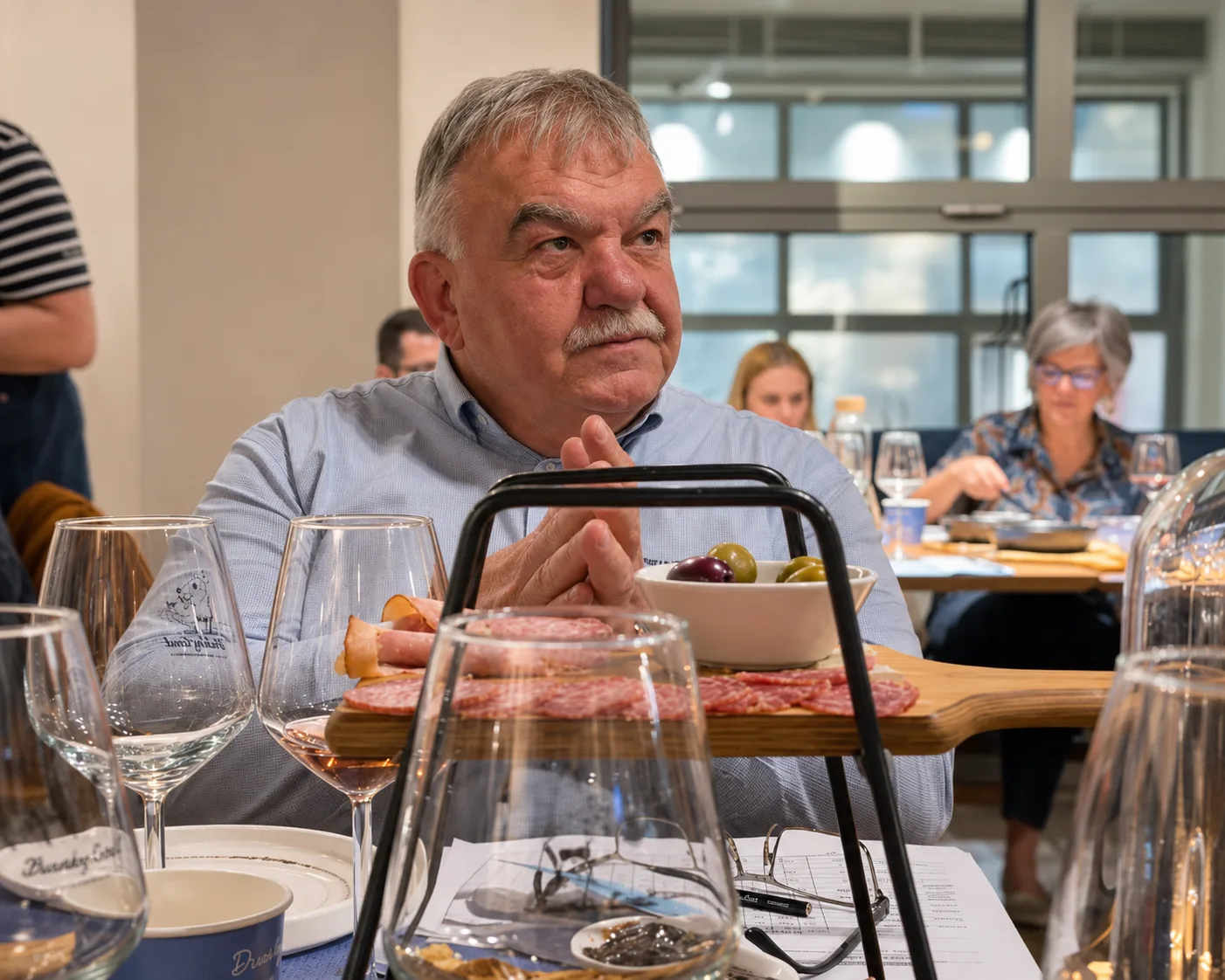
A phone call from Yiannis Boutaris that changed a life, Rieslings that need years to reveal their character, Xinomavro wines made from the very same grapes yet evolving in remarkably different ways, and a bold experiment waiting for the winter frost.
These were just some of the discoveries from the first gathering of our At the Table with the Winemaker series, featuring Christos Boskos of Vegoritis Winery in Amyntaio, Northern Greece.
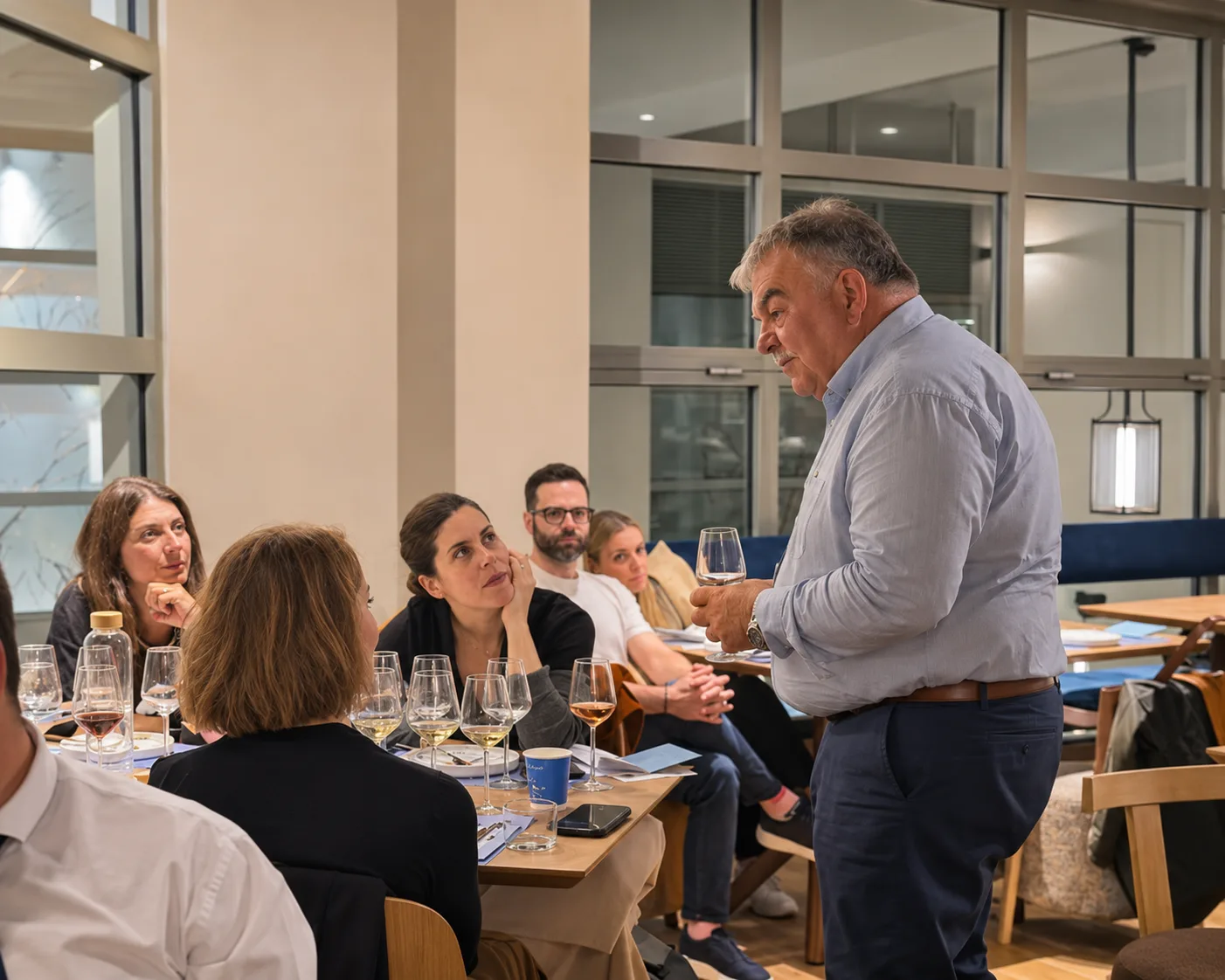
At Drunky Goat STOA, with glasses filled and conversation flowing, we tasted different vintages, compared winemaking approaches, and got to know a man who speaks about wine with honesty, experience, and an enduring curiosity to experiment.
From the Mines to the Vineyard: An Unexpected Journey
Christos Boskos's story doesn't begin at a family winery. Born and raised in Amyntaio, he studied mechanical engineering and, from 1991, worked as a contractor for Greece's Public Power Corporation (PPC) in the mines of Western Macedonia. But in 1999, a phone call from Yiannis Boutaris changed the course of his life.
Boutaris was looking for someone to organize the mechanical equipment at his winery in Amyntaio. Christos didn't arrive as a winemaker. He came for the machinery, the facilities, and production operations. Wine gradually became part of his life through the people he met, the relationships he developed, and the conversations shared around the table.
He even recalled how, during one of his earliest tastings, he compared a wine to... Malamatina, Greece's familiar retsina! Rather than dismissing him, Boutaris recognized that while Christos still had much to learn about wine, he deserved the opportunity to do so.
What Christos took from that experience went far beyond technical knowledge. He absorbed a philosophy built on honesty, collaboration, and trust in people. As he explained, Boutaris believed that one producer's success should not come at the expense of others, but should help the entire region grow.
Amyntaio itself underwent that transformation. Once a wine-growing region largely associated with high-volume production, it gradually began developing a stronger identity, placing greater emphasis on quality and the expression of its terroir.
In 2010, Christos launched his own Vegoritis wine labels, with Yiannis Boutaris supporting the initial business venture. A relationship that began with a phone call had become the foundation of an independent winemaking journey.
Amyntaio and the Wines That Reward Patience
What makes the wines of Amyntaio so distinctive?
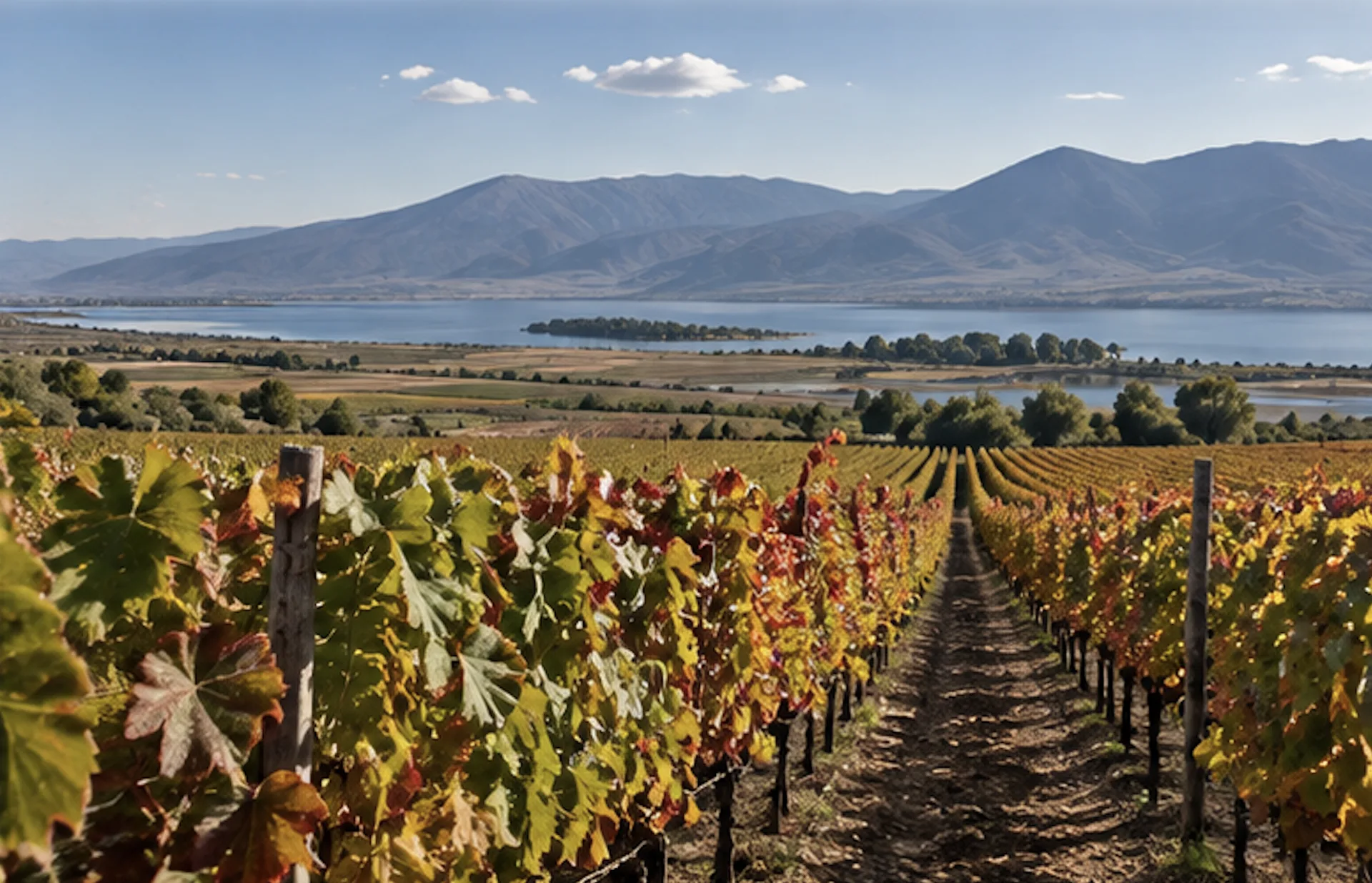
Christos spoke about the lakes, the altitude, the northerly winds, and the region's poor, sandy and limestone-rich soils. About warm days followed by cool nights, allowing grapes to ripen while retaining their natural acidity.
That acidity is one of the key elements that allows certain wines to develop beautifully over many years. Not the only requirement, as he pointed out, but an essential part of their balance.
We understood this much better when we tasted two different Riesling vintages, 2017 and 2022, side by side.
The 2017 showed greater body, a spicy character, and pronounced salinity, bringing it closer to a German-style Riesling. The 2022 expressed a different personality, with more noticeable petrol notes, a characteristic aroma often found in mature Rieslings.
We also discovered why Christos deliberately delays releasing his Riesling. Rather than focusing exclusively on freshness and primary fruit aromas, he gives the wine time to develop greater complexity. So while other producers may already be selling their latest vintages, he might still be presenting a wine that has spent several years maturing at the winery.
And this philosophy isn't limited to white wines.
One of the evening's most interesting stories concerned the 2013 Xinomavro. In its early years, it was a rather wild wine, with pronounced acidity and assertive tannins. Thirteen years later, however, it has evolved into a wine displaying the rich aromatic profile of a beautifully aged Xinomavro.
A wine that initially caused its maker some concern eventually became one of his best examples of why patience matters.

Xinomavro: One Grape, Different Personalities
Xinomavro naturally took centre stage throughout our conversation.
Christos explained how Xinomavro from Amyntaio differs from expressions found in Naoussa or Rapsani. In his region, the grape often develops a more aromatic, less heavily structured character, with distinctive notes of sun-dried tomato, black olive, and leather.
We also tasted the 2025 Xinomavro Rosé, a wine designed to offer more than a light, refreshing summer drink. By keeping the juice in contact with the grape skins for 24 hours, Christos achieves greater colour, structure, and gentle tannins, creating a rosé that can also hold its own at the dinner table.
Another fascinating comparison was between his classic Xinomavro and the Reserve. Christos explained how additional time in oak can contribute greater structure and ageing potential. Yet he admitted that he often personally prefers the classic version, because it expresses the fruit and grape variety more clearly.
Even more intriguing was an experiment that began in 2017.
Same vineyard, same vintage, same ageing conditions. Just one difference: the fermentation process.
Christos divided the Xinomavro into two separate tanks. In one, he used selected commercial yeasts. In the other, he allowed fermentation to begin spontaneously, without adding cultured yeast.
Both wines were then aged for 24 months in comparable barrels.
The results were particularly revealing. The first wine was more approachable and ready to enjoy in its younger years. The second, initially wilder and more tannic, now appears to retain more fruit and show greater longevity.
This doesn't establish a universal rule. Spontaneous fermentation carries its own risks, and Christos readily acknowledges that the process cannot be entirely controlled.
But it is a wonderful illustration of how much a winemaker's decisions matter — and why two wines made from the same grapes can develop completely different personalities.
One Final Experiment, Waiting for Winter
Towards the end of our conversation, Christos shared another project that is still very much a work in progress.
He has left approximately three tonnes of Riesling grapes on the vines, hoping that the Amyntaio winter will become cold enough to attempt an Eiswein-style wine — the distinctive sweet wine produced from grapes that freeze naturally while still on the vine.
Everything depends on the weather. The grapes must remain in the vineyard until sufficiently cold conditions arrive. If they freeze naturally, they will be harvested and pressed while still frozen.
This process makes it possible to produce a concentrated, sweet wine while preserving the vibrant acidity that makes Riesling so distinctive.
Success is far from guaranteed. A previous attempt yielded too little wine to be practical.
But perhaps that is what makes this story especially interesting. Even after decades of experience, Christos continues to explore, experiment, and leave room for the unexpected.
More Than a Wine Tasting
If there's one thing we took away from our first gathering, it wasn't just the wines we tasted.
It was the stories behind the decisions, the successes and the setbacks, the questions around the table, and the opportunity to get to know a producer beyond the formality of a traditional wine presentation.
With wine in our glasses, carefully selected food on the table, and a conversation that travelled from Yiannis Boutaris to the future of Greek vineyards, our first gathering captured exactly what we hope this series will become.
An opportunity to discover Greek wine through the people who create it.
And, of course, to enjoy great company around the same table.
Your Seat at the Next Table Awaits!
Every gathering brings a different producer, new grape varieties, exceptional wines, and stories worth sharing.